
Model the tabletop rules
Cards, routes, costs, hidden information and win conditions become explicit data and state transitions.
Tabletop-to-digital game design
Relic Roads and Captains’ Causeway began as distinct tabletop game concepts. Building them digitally created playable evidence: a practical way to test rules, pacing and edge cases before the cost and constraint of a physical prototype. Both games then continued into complete, fully playable digital implementations and passed the same staged verification and production-sign-off process.
One design service, two possible outcomes
Printing boards, cards and components too early can make every rule change expensive. A focused digital implementation allows a designer to run complete games, repeat difficult situations and refine the rules while the design is still cheap to change.
That is one useful service in its own right. If the concept also suits digital play, the same foundation can continue into a polished standalone experience, computer opponents or private hosted multiplayer. It does not have to stop at prototype.
From concept to evidence
Cards, routes, costs, hidden information and win conditions become explicit data and state transitions.
A deterministic rules engine resolves choices consistently and exposes unclear or contradictory rules early.
Real play can refine pacing, balance, wording and component needs before committing to a physical prototype.
The playtesting build can remain a design tool or develop into a complete local or hosted digital game.
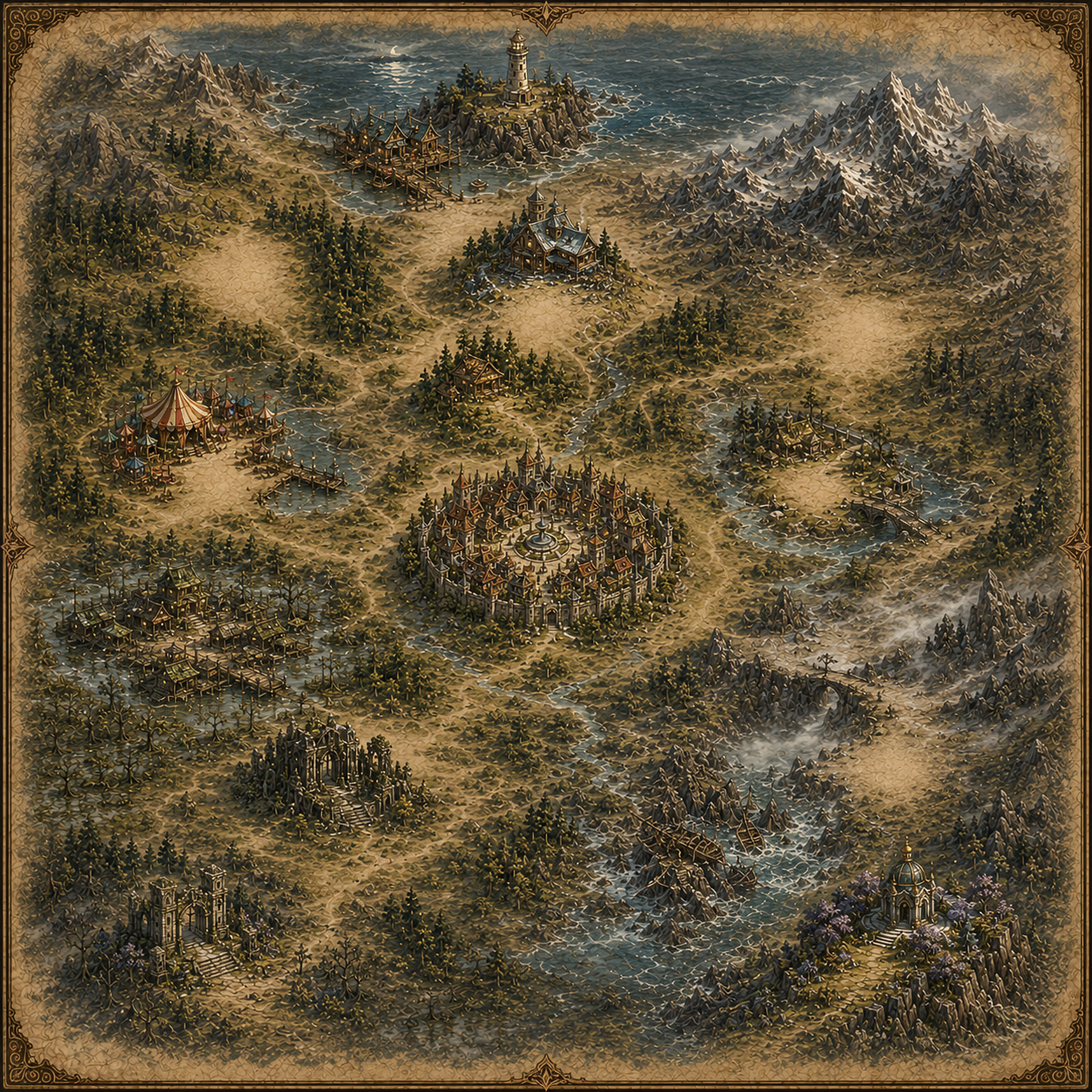
Game 01 · Relic Roads
Travellers move through Easy, Medium and Hard regions, search for ingredients, craft items, complete tiered quests and assemble the three pieces of a key before attempting a final quest.
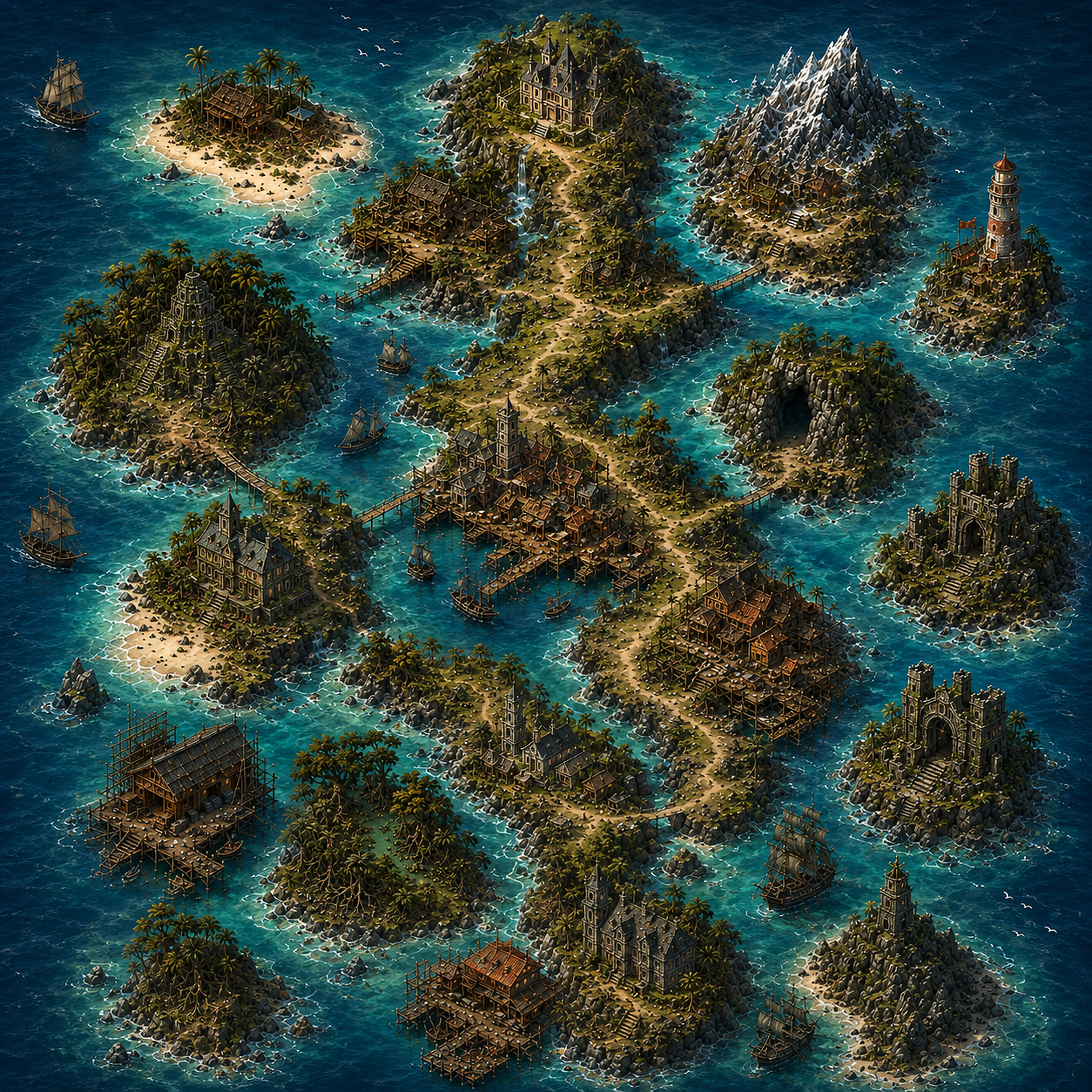
Game 02 · Captains’ Causeway
Captains navigate a costed route network, take quests, search regions, craft, cross dangerous passages, plunder estates and pursue secret-vault and final-quest progression.
Captains’ Causeway route planner
The full-board planner is not a decorative map overlay. It works over the game’s live route graph to calculate a captain’s cheapest legal path from their current position, or an ordered itinerary across several destinations.
Finds the lowest-cost route while respecting progression gates, route availability and special Crossings.
Reports total gold, ordinary moves and Crossing count for a single destination or a deliberately ordered multi-stop plan.
The same view-only planning logic is exercised in local play and the hosted multiplayer projection, with automated tests.
What was actually built
The implementation separates what the game is from how it is presented, so rules can be checked independently of the interface.
Validation, not theatre
Automated rule and interface tests exercise game actions, persistence and hosted-room behaviour.
Multi-client certification checks simultaneous commands, reconnects, authorization and room isolation.
Production sign-off for both games followed staged verification of rules, interfaces and hosted behaviour; neither title is presented here at a lower proof standard.
Relic Roads and Captains’ Causeway are founder-owned game designs shown as evidence of process and capability. Their rules, artwork, code, names and worlds are not included by implication in a new engagement.
Start a conversation
Bring the complicated version. We’ll define what needs to work, agree a sensible scope and identify whether the right next step is discovery, prototype, build or deployment.