
Design the game
Define the player decision, risk structure, feature cadence and distinctive reason for the cabinet to exist.
Game mathematics & interactive systems
Koraaver Bookmakers includes a complete internal arcade of mechanically distinct cabinet games. Each begins with rules and probability, then becomes a persistent, animated and testable playable system.
Two isolated demonstration cabinets from the larger arcade · demonstration credits only
The design problem
A cabinet portfolio can look broad while repeating one game underneath. This work takes the opposite approach: reel games, tracks, ladders, sealed picks, cluster grids, excavation, racing and push-your-luck structures are authored as separate rule systems.
Common infrastructure handles wallet state, persistence, committed outcomes and presentation conventions. The decision model and mathematics remain machine-specific.
From idea to playable evidence
Define the player decision, risk structure, feature cadence and distinctive reason for the cabinet to exist.
Express symbol weighting, win evaluation, paytables, feature probabilities and payout behaviour as reproducible rules.
Run large-spin calibration, deterministic acceptance cases and persistence tests before presentation can disguise a fault.
Join the rules to state, animation, artwork, sound, wallet behaviour and refresh-safe committed outcomes.
Two different demonstrations
The public routes deliberately expose only the selected cabinets. They do not open the wider campaign, wallet or arcade lobby.

Cabinet 01
A 42-space press-your-luck loop. Blanks grow the pot, multipliers settle it and crosses destroy it. The interesting choice arrives after a successful build: collect now, or pay to risk the pot again.
Cabinet 02
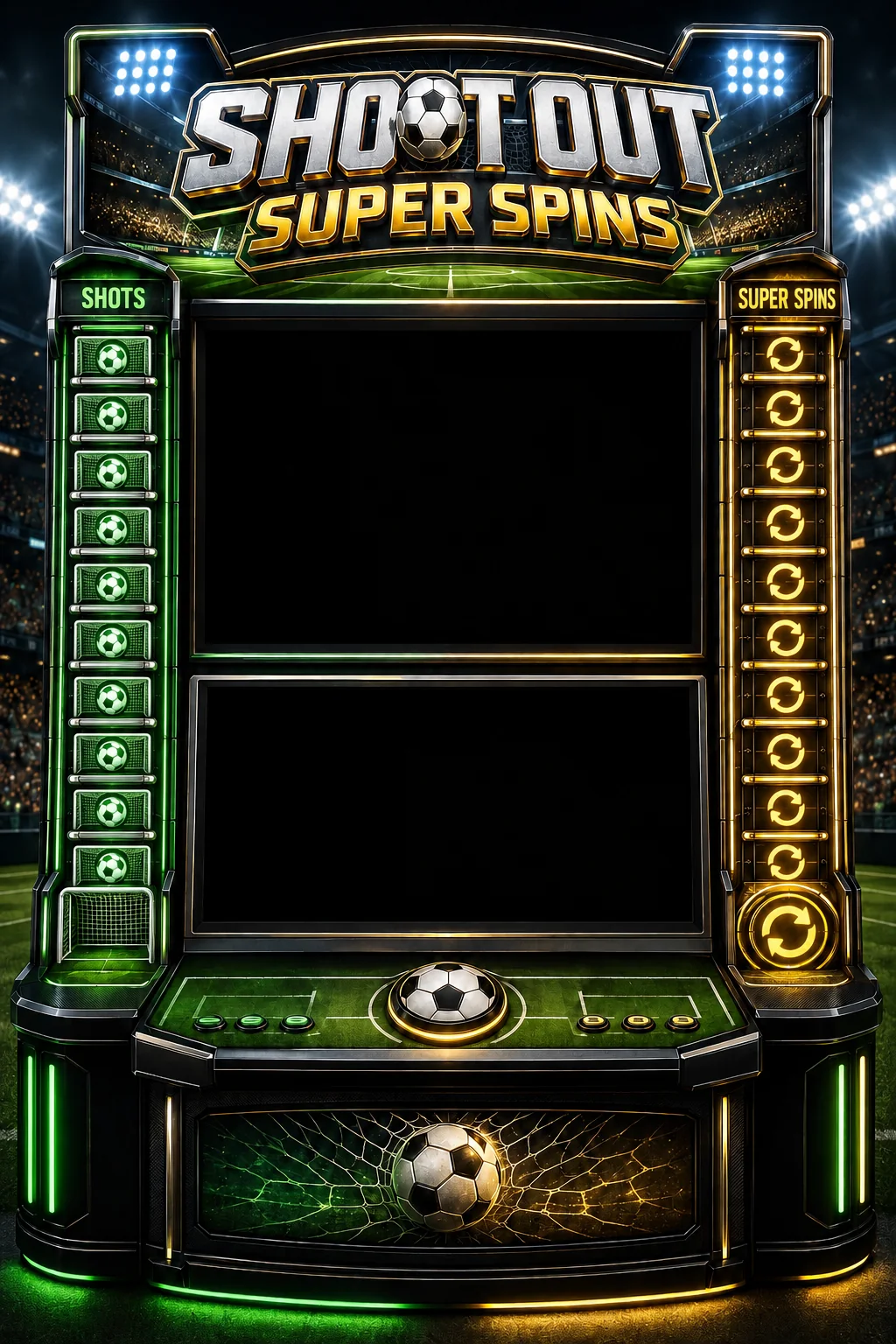
A five-reel, ten-line game with two persistent builders. Footballs strengthen the Shoot Out; rattles strengthen Super Spins; reducers can move either ladder backwards before Scatters hand the decision to reel five.
Weighted symbols, fixed paths, win evaluation and feature distributions are explicit data rather than animation-driven outcomes.
Calibration scripts and deterministic acceptance cases challenge game behaviour separately from the visual cabinet.
Common wallet, persistence and presentation principles support many game types without forcing them into one mechanic.
Demonstration boundary
The live cabinets use resettable demonstration credits. They accept no deposits, permit no withdrawals, award no prizes and have no monetary value. They demonstrate systems design, mathematical implementation and interactive realisation; they do not claim regulatory certification.
Start a conversation
Bring the complicated version. We’ll define what needs to work, agree a sensible scope and identify whether the right next step is discovery, prototype, build or deployment.