
Set the cover
Choose the meals and portions this shopping cycle actually needs to provide.
Client product delivery
The Family Fridge connects meal cover, recipe choice, portions, family input, food needs and the physical shop—without asking a household to become a project manager.
Private household testing and final handover are continuing.
The product problem
Household food planning is usually spread across memory, messages, saved recipes, dietary knowledge, leftovers and a list that changes aisle by aisle. Treating those as separate features simply moves the coordination burden onto the user.
The product was therefore designed as a single stateful loop. Each decision carries forward: required portions shape recipe selection; selected recipes shape quantities; household knowledge shapes the list; and the locked shop remains useful when the food is cooked.
The connected workflow
Choose the meals and portions this shopping cycle actually needs to provide.
Search or filter the recipe authority, with household preferences and food needs in view.
Combine recipe quantities, recurring products, items already at home and manual additions.
Swap a planned meal live, then see exactly what to put back, keep, add or remove without losing the trolley progress that still applies.
The product in use
Captured from an isolated demonstration household using fictional names and no client data.
Plan
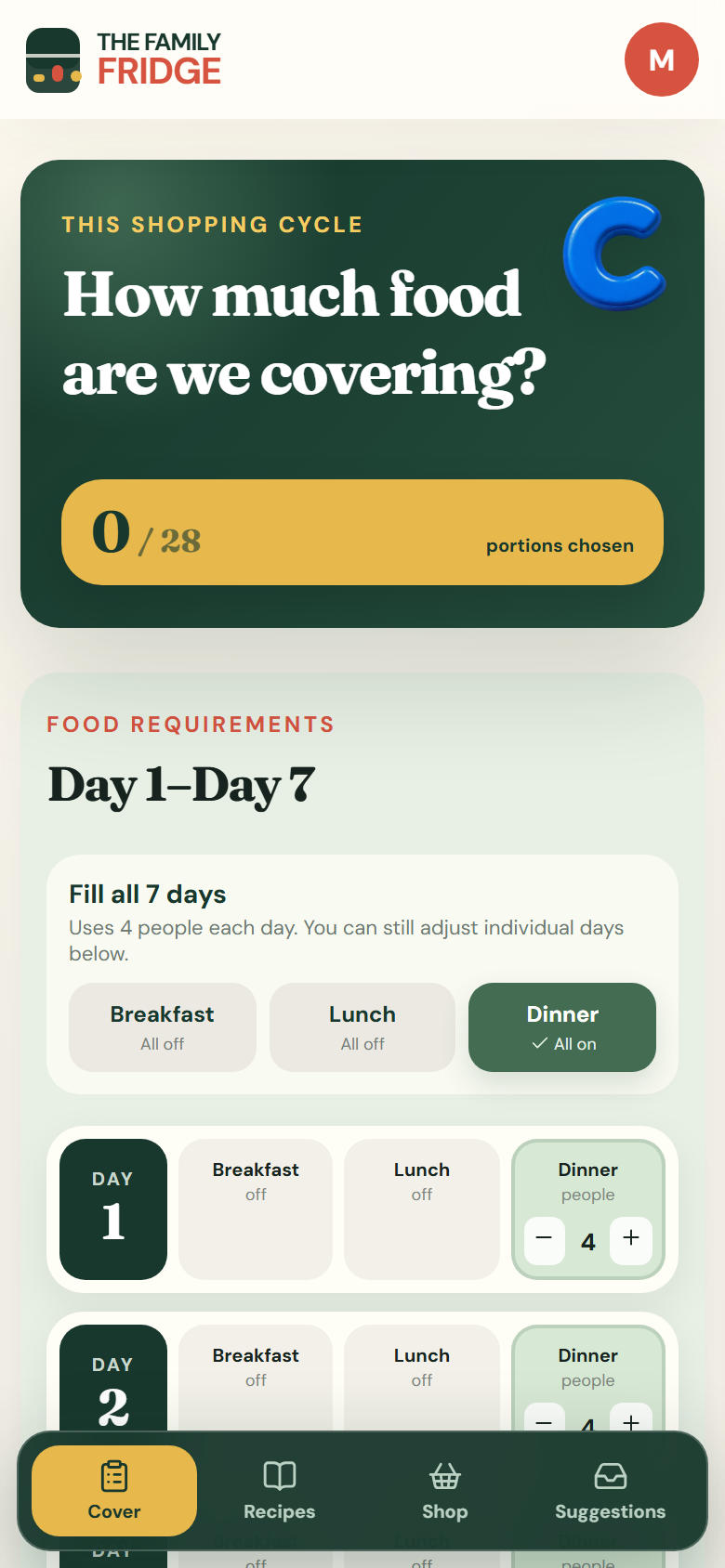
01The household describes the food it needs before choosing recipes. Days guide quantity without pretending the meal plan is a rigid calendar.
Choose
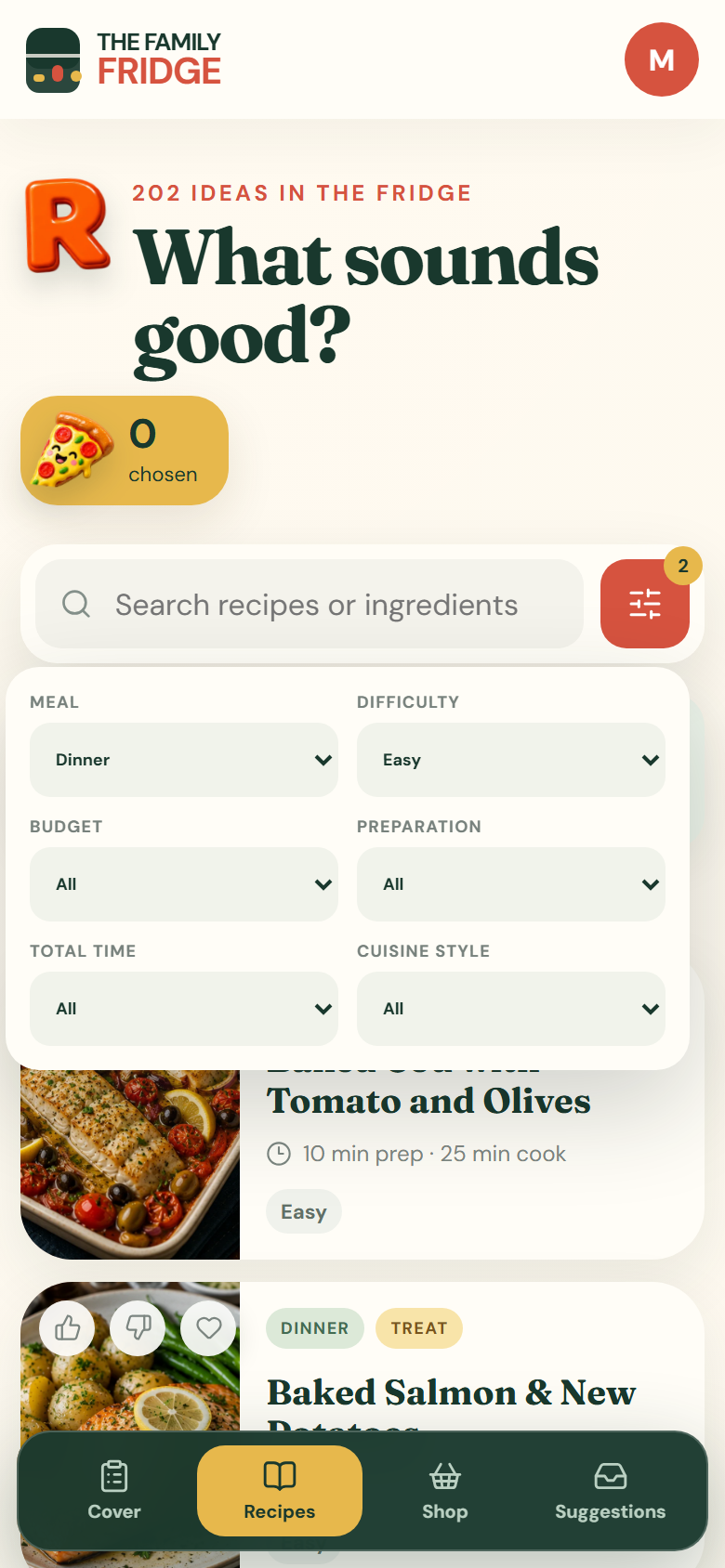
02A governed catalogue of 254 recipes supports search, structured filters, preparation details, portions, preferences and food-needs checks.
Build
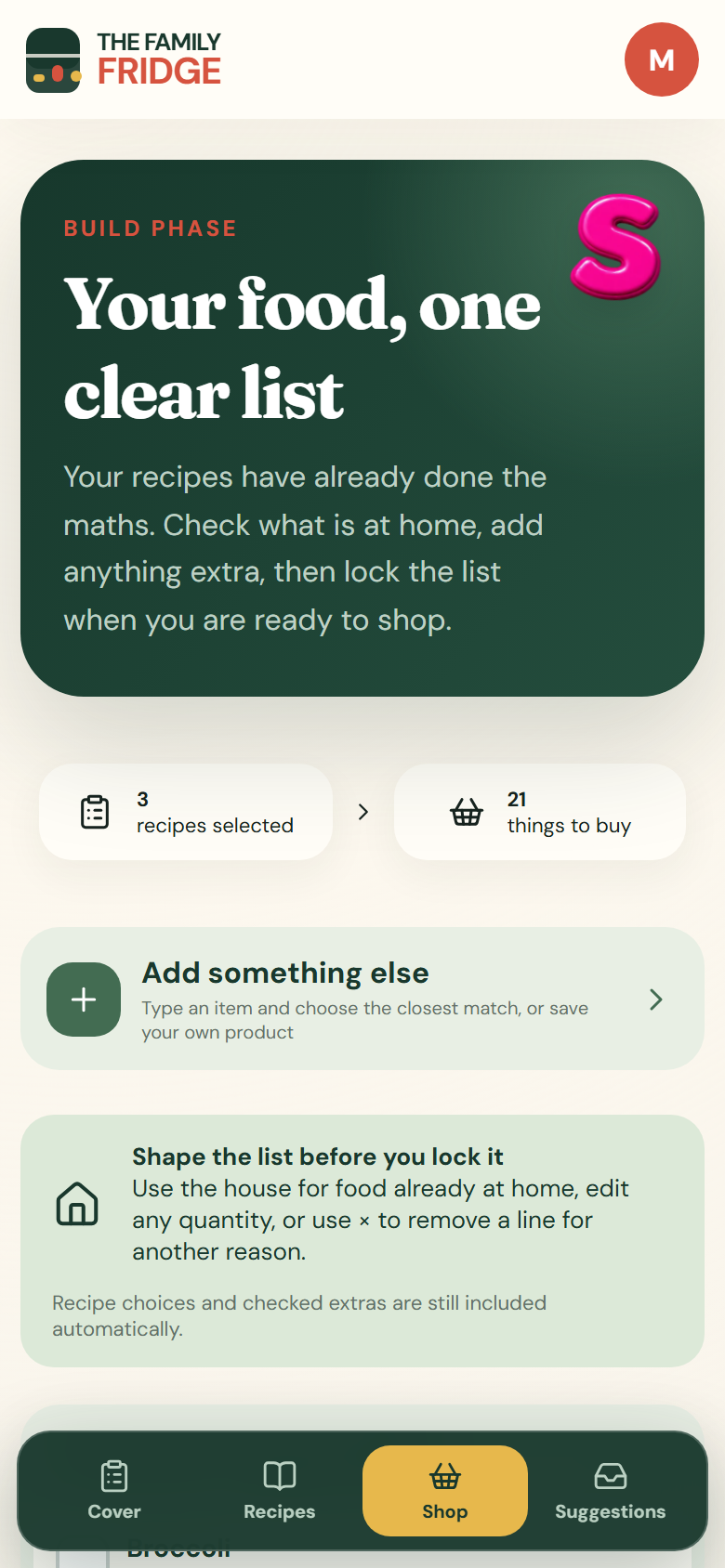
03Ingredients consolidate into one editable list. The primary user can account for food already at home, adjust quantities and add household products before locking the shop.
Shop & cook
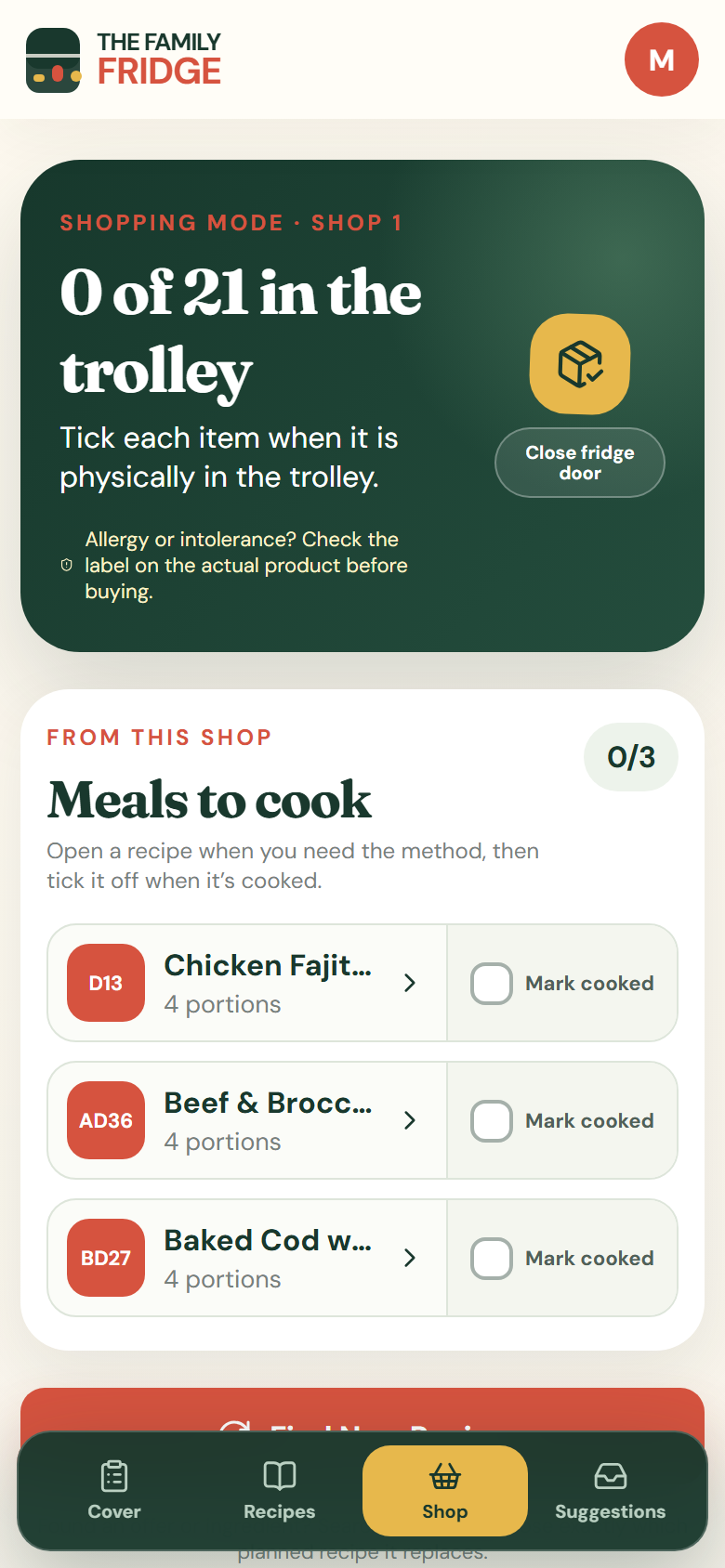
04Shopping Mode preserves the agreed starting point without making it rigid. An ingredient-led live swap recalculates the active shop into Put Back, Keep, Add and Remove, retains relevant trolley progress, and carries the replacement meal forward into cooking.
Product decisions
The primary user controls planning and sensitive household settings. Family members receive a simpler route for suggestions and meal reactions.
Recorded allergies, intolerances and preferences inform recipe suitability. The system warns and asks for an explicit decision; it does not invent substitutions.
Once shopping begins, the list becomes a durable cycle rather than a dead snapshot. Live meal swaps reconcile what has already been picked up with what the replacement recipe now requires, while preserving the decision trail through to cooking.
Recipes, units, pack behaviour, household variants and shopping provenance are structured so the interface can explain where quantities came from.
Delivery
Constellation Highway handled the workflow design, interface, governed data model, shopping calculations, implementation, automated testing and deployment architecture as one delivery problem.
Current boundary
This case study shows the production-test product through a fictional demonstration household. Public access to the working application is being held back while private household testing and final handover continue.
Start a conversation
Bring the complicated version. We’ll define what needs to work, agree a sensible scope and identify whether the right next step is discovery, prototype, build or deployment.