Choose the frontier
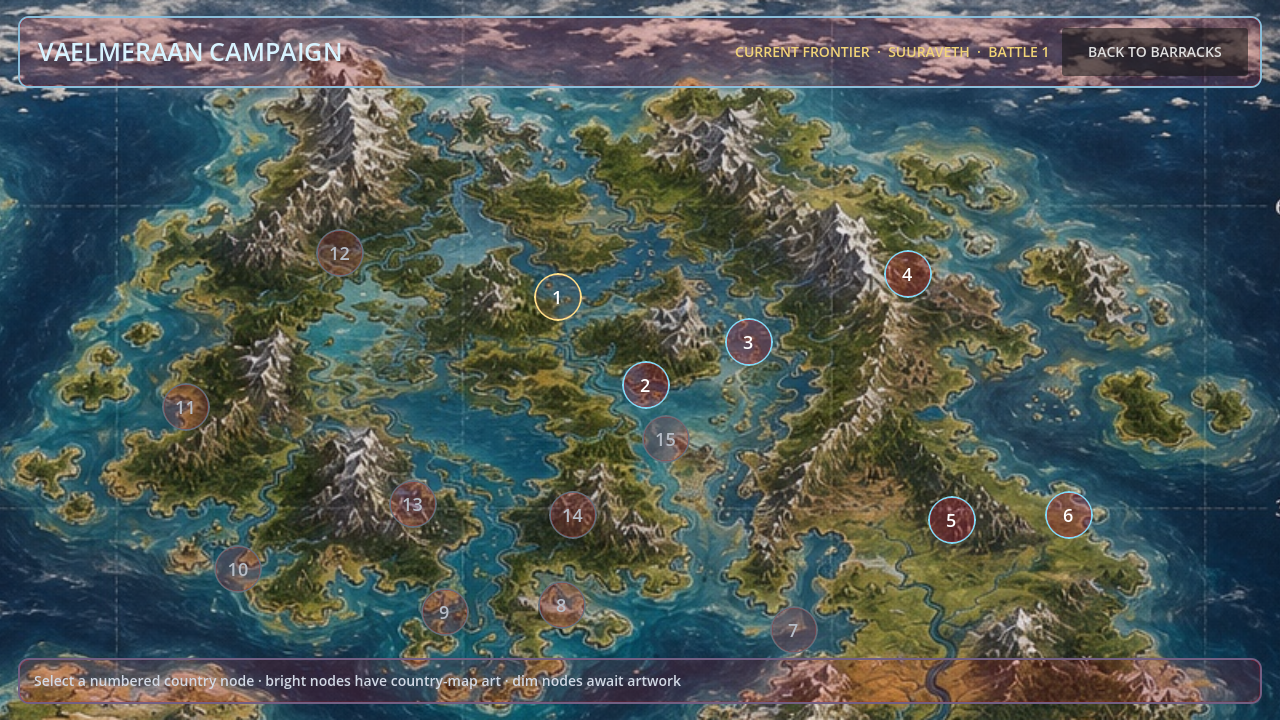
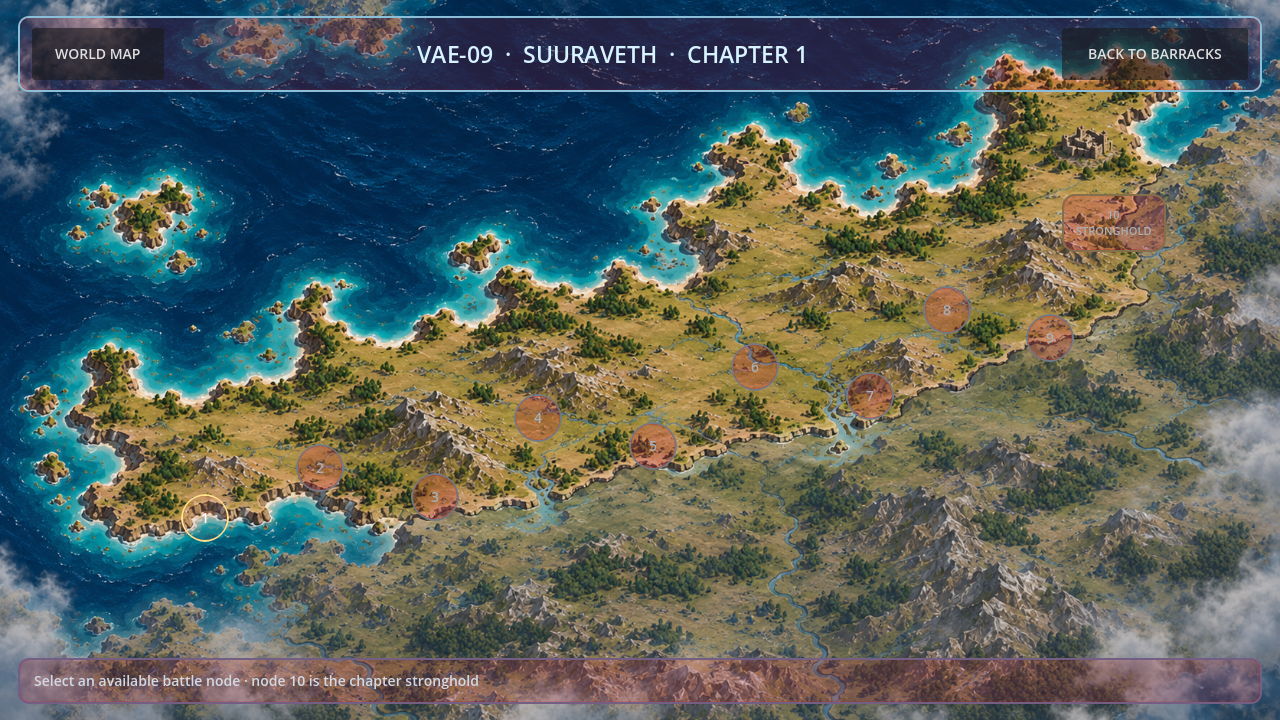
The Vaelmeraan world map leads into illustrated country routes rather than a disconnected level menu.
Campaign & autonomous combat systems
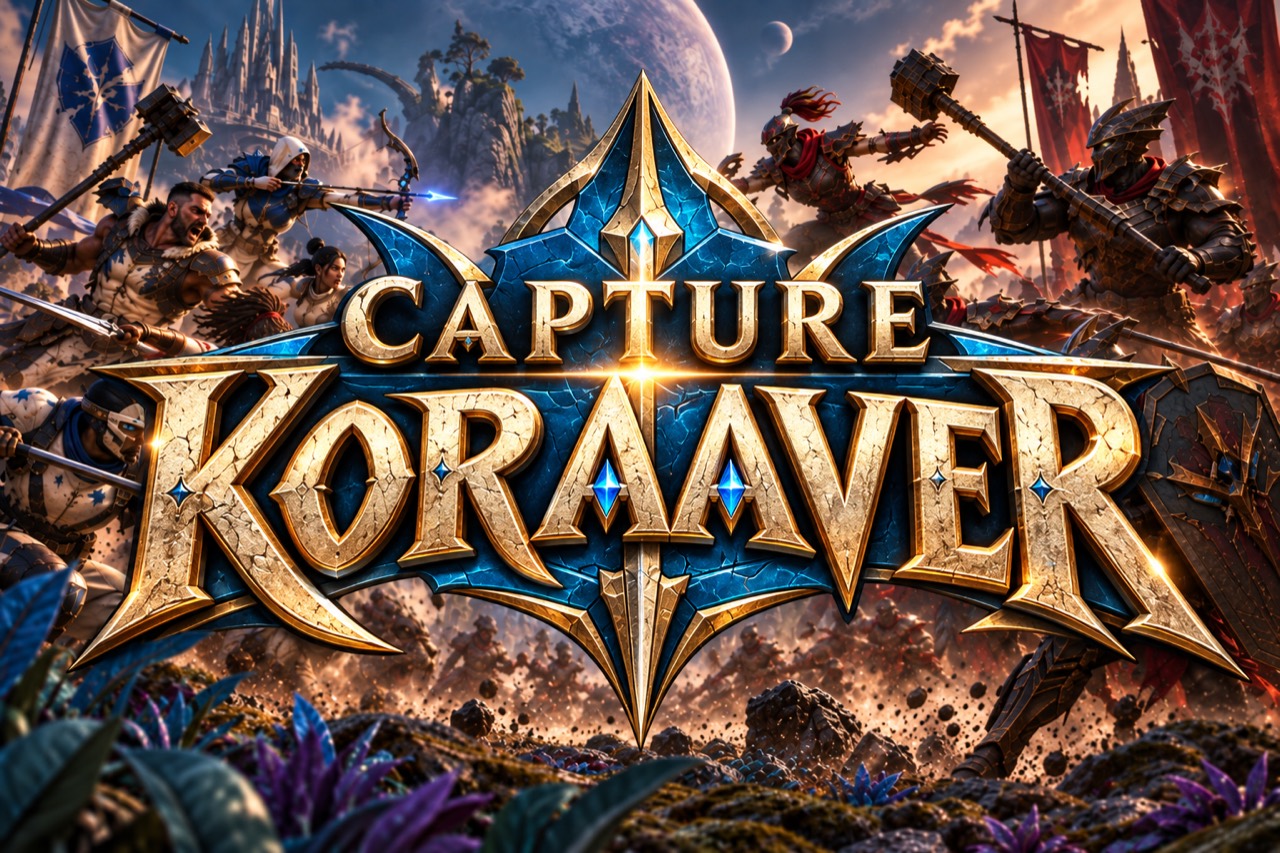
Capture Koraaver turns force-building into a playable campaign: world and country maps, persistent troops, four deployment waves, deterministic autonomous battles, Citadel assaults and earned hero intervention all operate as one connected loop.
The design problem
The player does not click individual soldiers around the field. They recruit and improve a persistent force, decide who enters each wave, commit a deployment and then watch those decisions meet an enemy built from genuinely different combat roles.
That required a strict separation between what the player-facing game prepares, what the combat engine decides, and what the screen merely presents. The same input can therefore be replayed and checked without trusting the animation to be the authority.
A campaign, not a battle selector
The playable loop
The Vaelmeraan world map leads into illustrated country routes rather than a disconnected level menu.
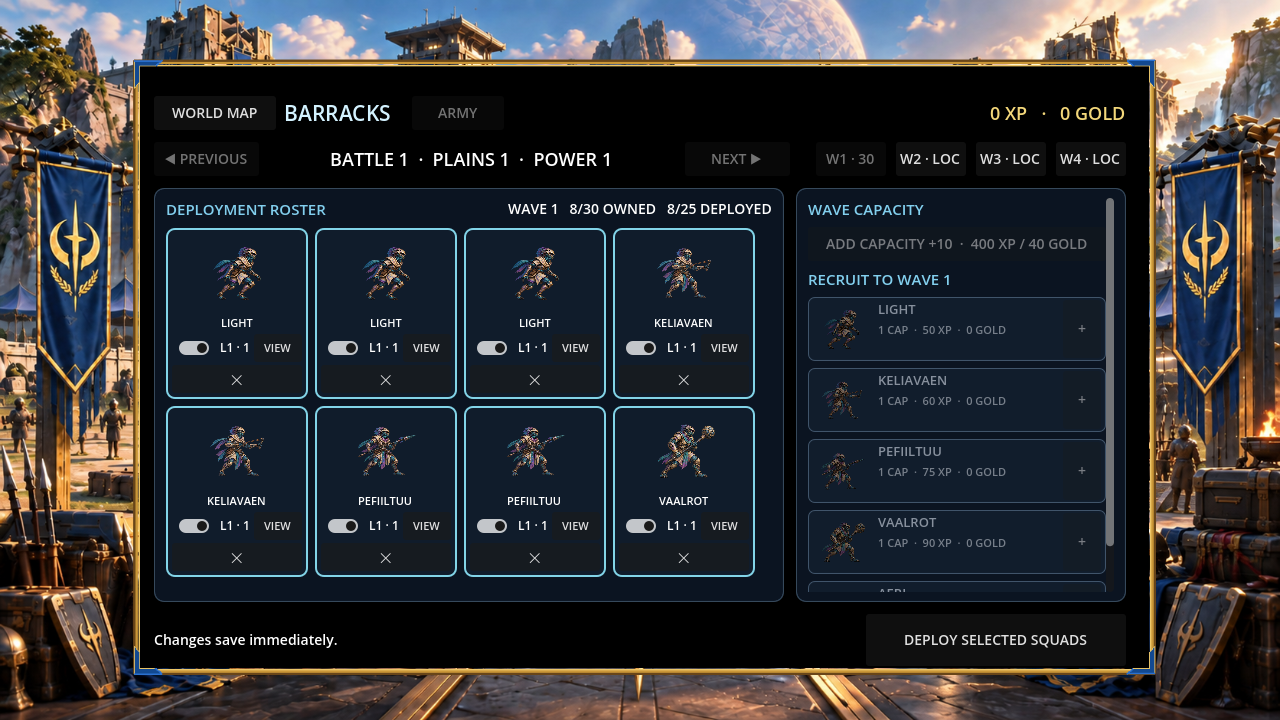
Persistent troops, levels, capacity, recruitment, specialisations, squads and wave loadouts are managed in the Barracks.
The selected force becomes an authoritative multi-wave battle input. Preparation matters before the first unit moves.
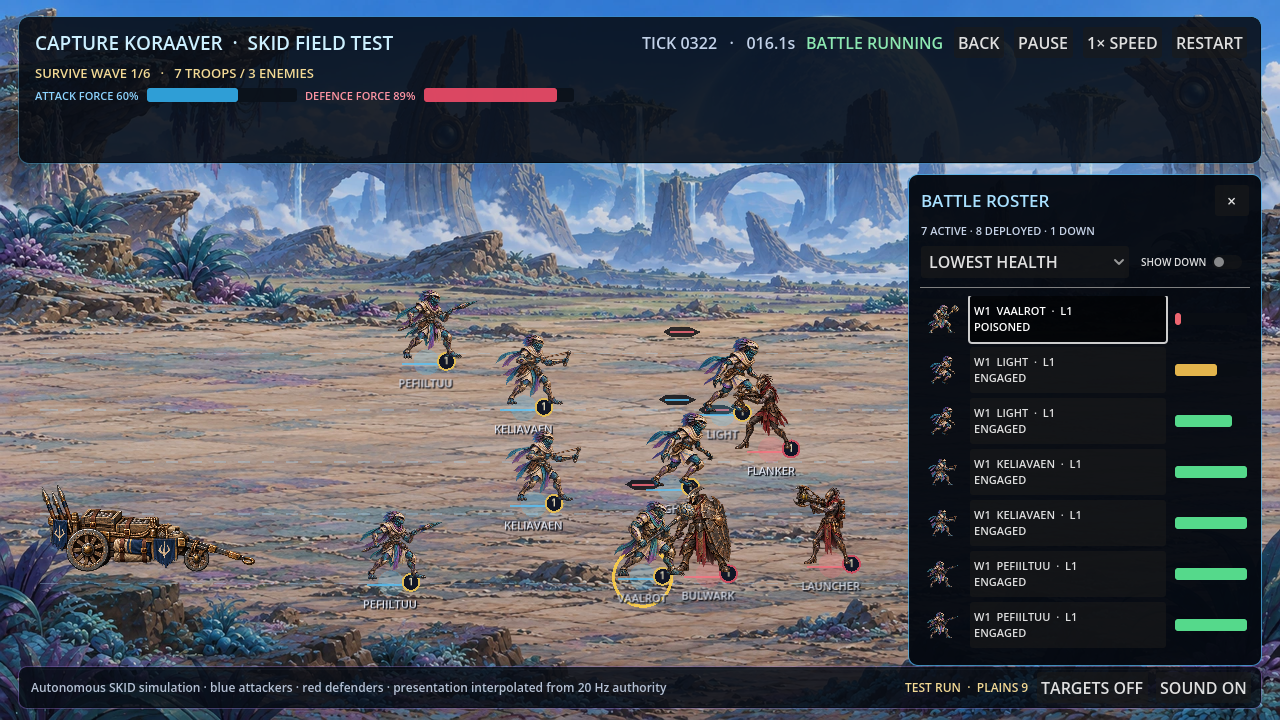
Combat resolves autonomously, with deliberately limited hero timing and tactical skills rather than direct unit control.
Persistent preparation
Recruitment, levels, dismissal value and permanent specialist choices remain attached to the saved roster.
XP, Gold, capacity, battle completion and sequential unlocks persist between engagements.
Each wave owns its troops, capacity and eventual hero slot, allowing a force to mature without losing its structure.
Deterministic battle authority
A fixed-tick combat engine owns movement, targeting, attack timing, projectiles, status effects, reinforcement waves, disablement and victory. Presentation interpolates those decisions; it does not secretly make them.
Current evidenced position
The connected campaign currently runs from its fresh eight-troop opening through Battles 1–9, the active Battle 10 Citadel assault and its first hero reward. Six illustrated country maps, management interfaces, enemy roles, battlefield environments, effects and audio are already integrated. The automated suite currently reports 884 passing assertions. This is strong evidence of the architecture and playable direction; it is not presented here as a finished commercial release.
Start a conversation
Bring the complicated version. We’ll define what needs to work, agree a sensible scope and identify whether the right next step is discovery, prototype, build or deployment.